

Our hands-on Fisher Gold Bug 2 review focuses on a simple reality: hunting placer gold in the Mojave Desert is an exercise in extreme patience and high-mineralization frustration. Most desert washes and exposed benches have been heavily worked over for decades; the easy, shallow pickings are long gone, and deep ground belongs to high-power pulse induction (PI) machines. For a Very Low Frequency (VLF) detector to earn its keep in these dry washes, it has to operate at a frequency high enough to light up sub-gram, fly-poop nuggets that older sweeps completely overlooked, while offering enough ground rejection control to keep high-iron basalt, hot rocks, and black sand runs from blowing your ears out.
The modern Fisher Gold Bug 2 Combo (GB2COMBO) operates at an ultra-high 71.01 kHz, engineered specifically for tiny target induction. The package landed as an anniversary gift from my wife and prospecting partner, Samantha, on May 29, 2026. After logging serious hours running it through aggressive wash cobble and decomposed granite—culminating in a verified 0.213-gram nugget pulled from pounded ground—this Fisher Gold Bug 2 review covers the raw field data, shop modifications, and trial friction from months on our desert gold claims.
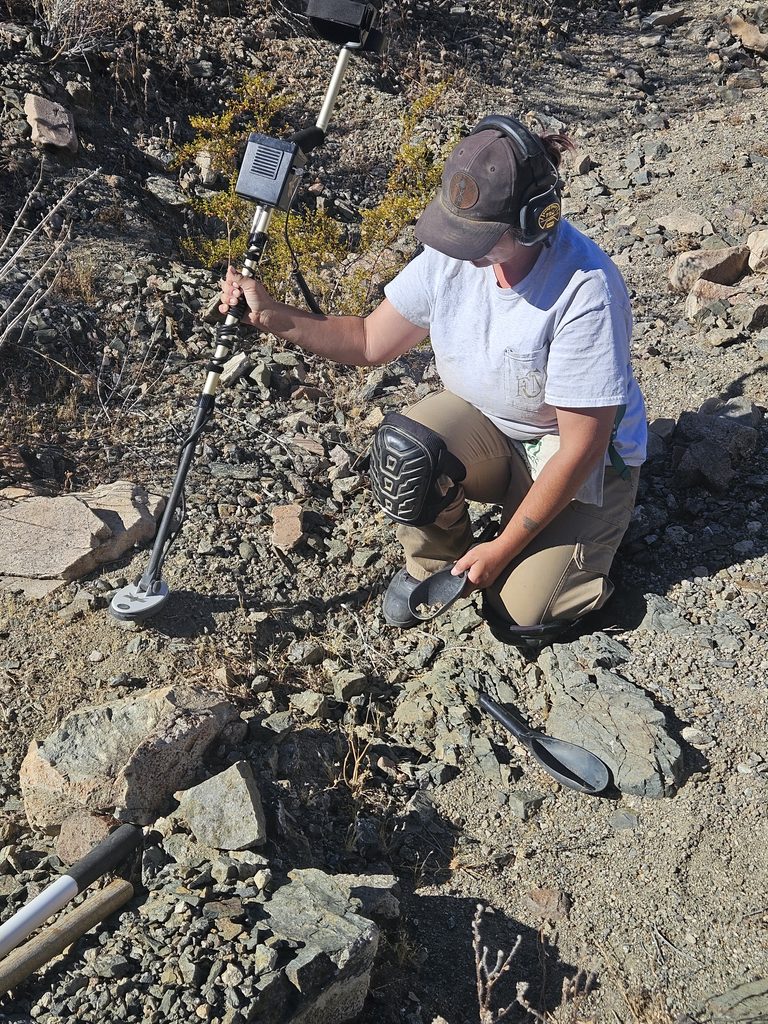
Table of Contents
TECHNICAL_SPECS: FISHER GOLD BUG 2 BREAKDOWN
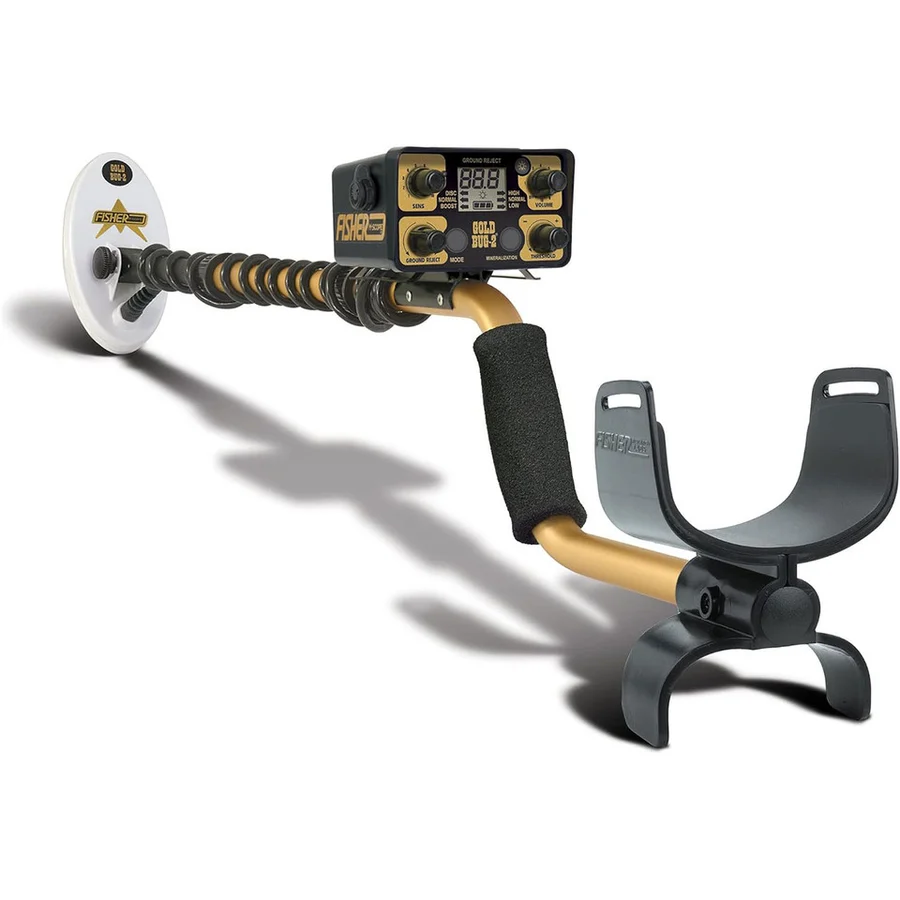
The Gold Bug 2 platform remains one of the highest-frequency continuous VLF detectors in production. While earlier legacy generations relied on analog toggle switches and a 16-turn vernier coarse/fine dial, the updated version integrates a digital Ground Reject interface and LCD display to streamline ground balancing. Below are the verified technical specifications for the combo unit:
| Feature / Metric | Specification |
|---|---|
| Manufacturer | Fisher Research Labs (El Paso, TX) |
| Model / SKU | Gold Bug 2 Combo (GB2COMBO) |
| MSRP / Value | $879.00 |
| Operating Frequency | 71.01 kHz Quartz-Crystal Controlled VLF |
| Total Weight | 2.9 lbs (Complete with upper stem and control housing) |
| Platform Fitment | S-Rod handle-mount with 3-piece takedown; hip-mount convertible |
| Operating Modes | All-Metal Auto-Tune (NORMAL), All-Metal (BOOST), Iron Discrimination (DISC) |
| Mineralization Settings | LOW (Gain boosted, slow retune), NORMAL, HIGH (Attenuated, fast retune) |
| Included Coils | 6.5″ Small Elliptical & 10″ Elliptical Co-Planar waterproof search coils |
| Searchcoil Cable | 7-foot shielded cable (designed for hip-mount reach) |
| Power Requirements | (2) 9V Transistor batteries (Dual drop-in rear battery compartments) |
| Audio Interfaces | 2″ Moisture-resistant internal speaker & 1/4″ sealed stereo/mono headphone jack |
UNBOXING: PACKAGING & HARDWARE REALITY CHECK
The combo unit retails at $879.00 and arrived directly in its original retail carton on May 29, 2026. Because this was an anniversary gift handed directly to me, I didn’t inspect the outer shipping container or freight handling, but the retail packaging itself arrived clean, rigid, and undamaged.
Inside, the components were neatly compartmentalized. Both the 6.5″ and 10″ elliptical coils were individually bagged, and the control housing was well protected from transit vibration. Everything promised in the GB2COMBO configuration was accounted for. However, unboxing immediately exposed an annoying stinginess on accessory hardware: Fisher only includes two hook-and-loop cable straps in the box. When you are dealing with a generous 7-foot search coil cable designed to accommodate hip-mounting, two wraps are completely inadequate for stem rigging. To prevent coil chatter on a VLF machine this sensitive, you need at least five wraps—four along the stem and one spare.
BENCH_TEARDOWN: ASSEMBLY & TOLERANCES
Comparing the included paper manual to legacy documentation highlights the modern upgrade: mechanical toggles and 16-turn potentiometers have given way to digital tactile push-buttons and an LCD display, as detailed in the official Fisher Labs Gold Bug 2 documentation. Assembly is straightforward and tool-free:
- Stem Interlock: Slide the lower fiberglass-reinforced nylon stem into the middle aluminum tube, and connect that to the upper S-rod assembly.
- Camlock Tolerance: The double-locking cam collars thread down firmly. Once tightened, the shaft assembly is rigid, with virtually zero side-to-side slop or handle wobble under normal sweeps.
- Coil Attachment: The nylon coil mounting bolt and knurled wingnut provide solid clamping friction on the coil ears without requiring aftermarket rubber washers or shims.
Much like the hardware adjustments we had to make during our Hooke Road Stubby Front Bumper Review and our trail-tested Hooke Road Gladiator Rear Bumper Review, a few factory shortcuts on the detector require immediate user attention:
- The Handgrip: While the shaft camlocks are solid, the factory foam handgrip on the S-rod is disappointing. It felt loose right out of the box; Fisher only tacked it down with a dab of adhesive at the front edge. The rest of the foam grip twists and shifts freely under hand pressure. I will eventually strip it, run industrial grip adhesive down the aluminum tube, and reset it properly.
- Battery Doors: The dual 9V drop-in battery compartments at the rear of the housing are tethered with nylon cord to prevent loss in the dirt. While the latches hold the batteries rock-solid without rattle, they are excessively stiff to release. Swapping batteries in the field requires real thumb pressure to unhook the doors.
FAB_SHOP: 3D-PRINTED PCTG COIL SCUFF COVER
Sweeping a bare coil inches over decomposed granite, fractured basalt, and sharp desert caliche will abrade the factory epoxy casing in short order. Replacement coils are expensiv. Rather than waiting on commercial covers, I modeled and 3D-printed a custom scuff guard using PCTG on the shop printer.
I kept the print thin—only three layers thick (~0.6mm)—to minimize weight at the end of the stick. It presses onto the 6.5″ coil with a snug friction-fit, and I wrapped the upper seam with heavy-duty black gaffers tape to prevent mineralized black sand dust from migrating between the cover and coil housing. In field testing across dry washes, the cover demonstrated zero signal loss or sensitivity drop on micro-targets.
AUDIO_DIAGNOSTICS: SPEAKER VS. HIGH-IMPEDANCE PHONES
The Gold Bug 2 features an internal 2″ moisture-resistant speaker. Unlike older legacy prospecting units, this speaker is surprisingly loud—it had no issue cutting through Mojave gusts or nearby chatter. However, conducting a realistic Fisher Gold Bug 2 review on sub-gram targets means using high-impedance headphones; an external speaker easily lets faint threshold dips slip past unheard.
I plugged into the 1/4″ headphone jack and tested three different headphone configurations :
- Sun Ray Pro Gold Headphones: (Now discontinued, but easily the gold standard pairing) . The high-impedance drivers make threshold hum crystal clear . Because the drivers are so efficient, I had to back the detector volume down significantly to prevent ear blowouts on shallow surface iron .
- DetectorPro Black Widow Platinum: Excellent ambient noise attenuation in high wind; produces exceptionally sharp target edge definition .
- Vic Firth Studio Monitor Cans (Hardwired): High passive isolation, though bulkier over an all-day desert session .
FIELD_RECOVERY: MINERALIZATION & NUGGET LOG
Tuning a 71.01 kHz VLF machine in the Mojave Desert requires constant operator discipline . The ground out here is brutally hot—saturated with iron-rich caliche, hot rocks, black sand runs, and magnetite nodules . Any thorough Fisher Gold Bug 2 review must address how this circuit manages severe ground noise .
The push-and-turn digital Ground Reject interface is a noticeable upgrade over old multi-turn analog pots . Rotating the encoder slowly provides granular 0.1-step adjustments; spinning it quickly jumps rapidly through values . The 3-digit LCD readout (defaulting to 75.0 on a long press) provides actionable data . In my S&J Adventures field log, I record the exact ground reject numbers for specific washes . When returning to that drainage, I dial the Ground Reject encoder straight to my logged number, bob the coil twice, and I am hunting immediately .
The three-way mineralization setting controls internal circuitry gain and retune speed . In our local Mojave washes, the Low Mineralization setting is completely unusable; high circuit gain causes the machine to erupt into continuous chatter . Running in Normal or stepping down to High shortens the retune speed and cuts receiver saturation, allowing you to establish a stable, steady threshold over mineralized gravel .
The Gold Bug 2 also features an Iron Discrimination mode . When swung over ferrous nails or wire, the audio blanks out completely, while brass casings, birdshot, and gold pop with a clean VCO tone . The Golden Rule: Do not prospect in DISC mode . The iron discrimination circuit will easily blank out or mask faint, deep, sub-grain nuggets . I hunt exclusively in All-Metal Normal mode to hear every micro-tone, only clicking into DISC mode to interrogate a loud, wide surface hit before breaking out the pick .
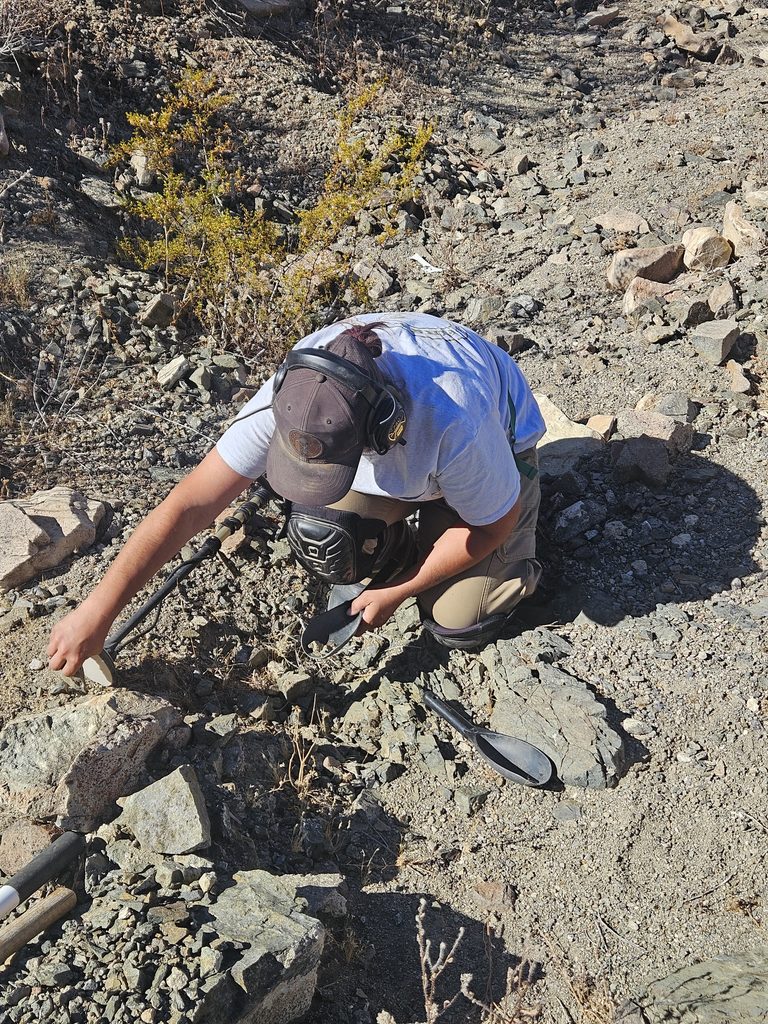
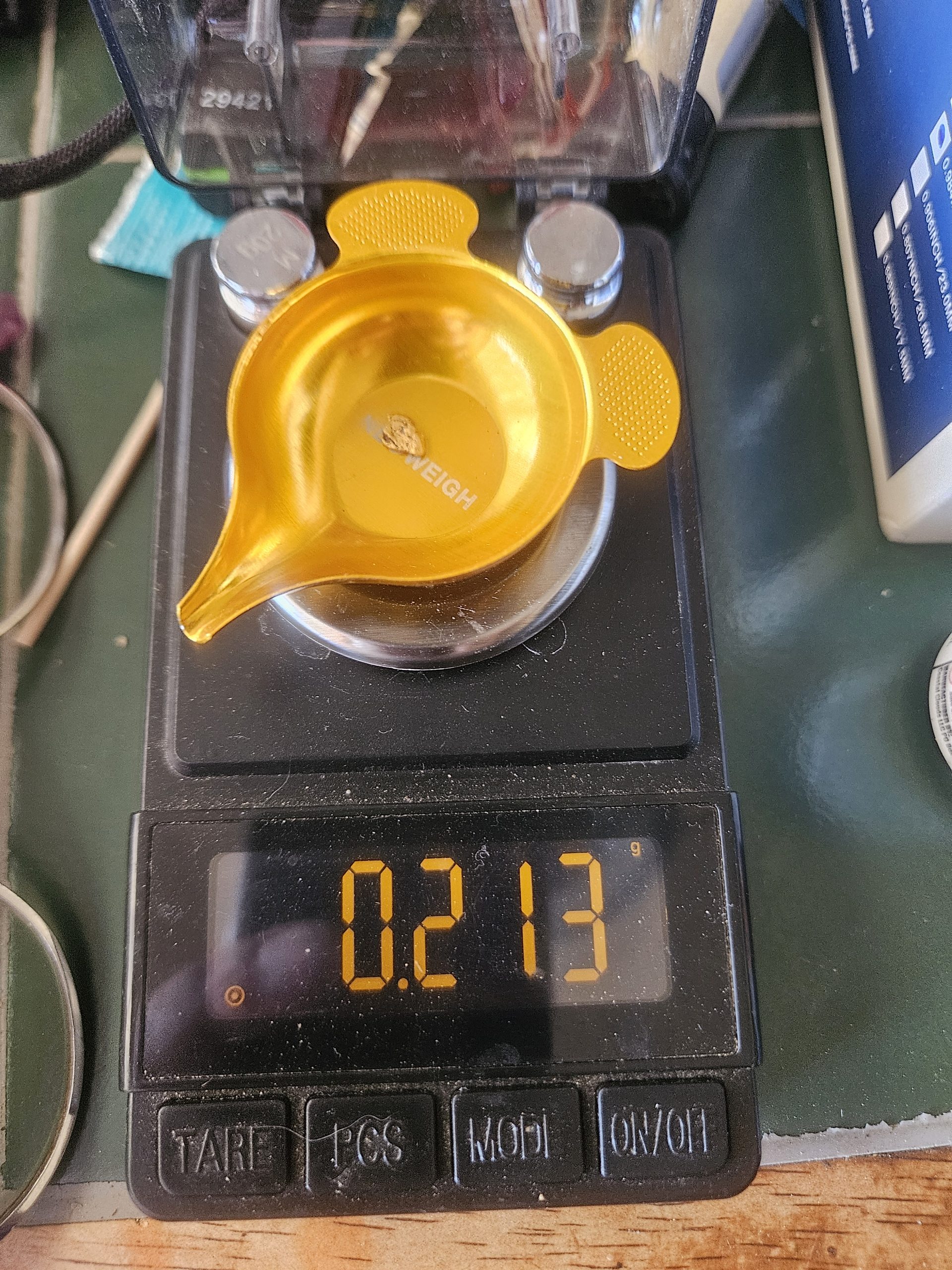
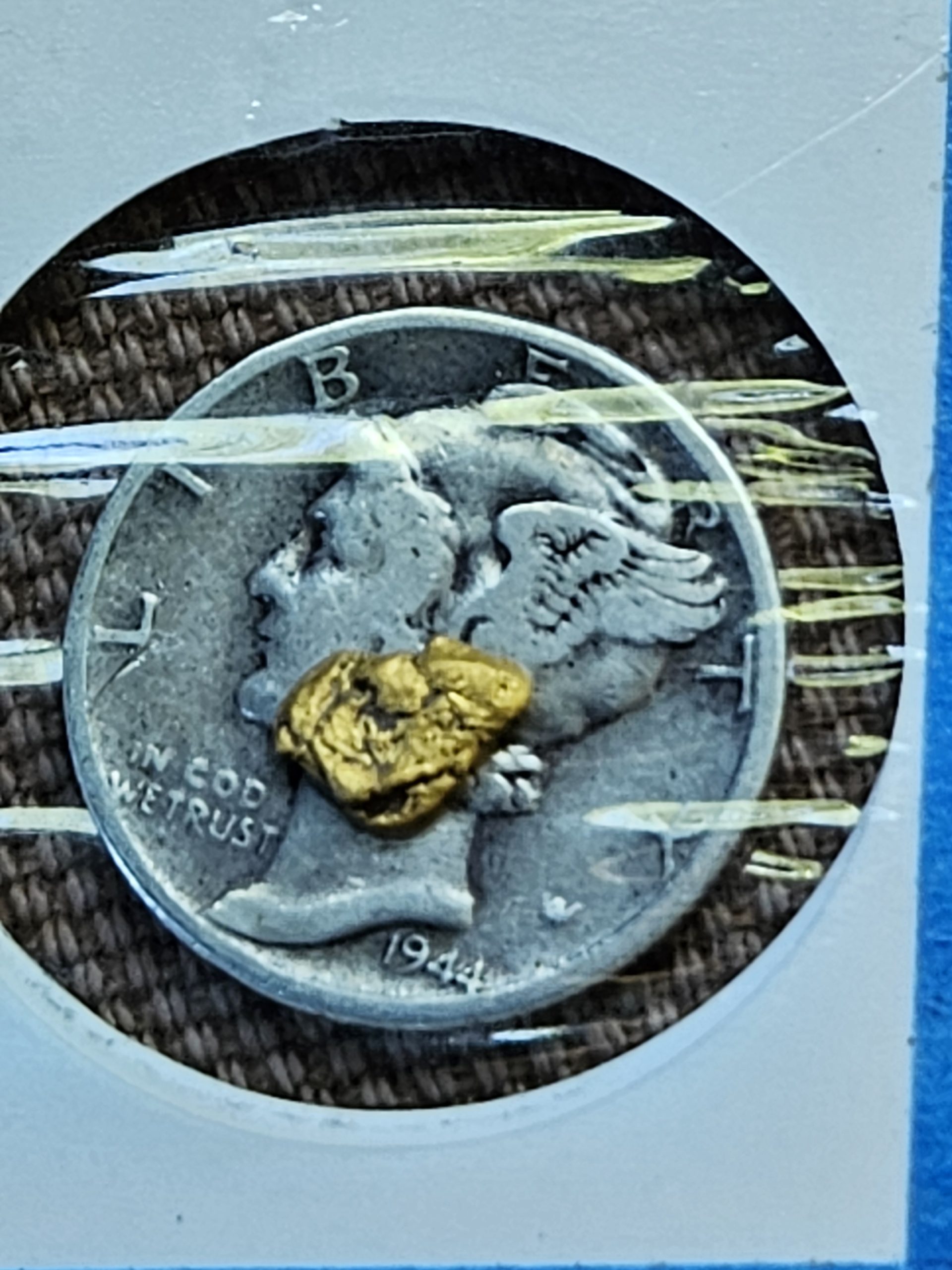
The true payoff occurred on my third field outing running the 6.5″ small elliptical coil . I took the machine into a local wash that had been hammered for decades by clubs and locals . Large targets and deep ground had been cleared out long ago by pulse induction detectors . Working low and overlapping sweeps by 50% across a rocky cobble bench, the Gold Bug 2 gave a sharp, repeatable threshold rise . Scraping an inch of loose decomposed granite and caliche aside, I ran the scoop over the coil face . Verified on our digital scale back at the bench: 0.213 grams (approx. 3.28 grains) at roughly 1 inch depth . It was my first nugget pulled by detector, recovered from ground that several other machines had swung right past .
FIELD_ASSESSMENT: PROS & CONS MATRIX
⚡ THE ADVANTAGES
- Unmatched Micro Sensitivity: 71.01 kHz circuitry fires hard on sub-grain, fly-poop nuggets low-VLF and multi-frequency rigs skip .
- Digital Ground Reject Logging: 3-digit LCD lets you log wash mineralization numbers and dial straight back in on return trips .
- Rigid Camlock Tolerances: Dual-locking cam collars and fiberglass lower stem lock out handle flex and sweep rattle .
- Loud Speaker Punch: 2″ moisture-resistant speaker cuts through stiff desert winds for quick spot-checks without cans .
- Complete Coil Duo: 6.5″ sniper coil picks bedrock cracks clean; 10″ elliptical covers ground on open benches .
⚠️ TRAIL FRICTION
- Inadequate Cable Straps: Only 2 straps included for a 7-foot cable; extra hook-and-loop wraps are required immediately .
- Slipping Foam Grip: Foam handgrip is only tacked at the front edge and twists freely around the S-rod under load .
- Stiff Battery Latches: Rear 9V doors are tightly fit and fight thumb pressure during dirt-side battery swaps .
- Demanding Sweep Discipline: High sensitivity punishes lazy coil heights and demands non-stop ground balance checks .
VERDICT: THE BOTTOM LINE
To conclude this Fisher Gold Bug 2 review, this unit is not a casual turn-on-and-go park hunter; it is an unforgiving, hyper-focused prospecting tool designed specifically for target recovery in scraped dirt and rocky washes. If you hunt mineralized western ground that has already been picked over by larger coils, the 71 kHz operating frequency gives you a legitimate edge on sub-gram nuggets that other prospectors left behind. Expect to immediately buy extra cable wraps, glue down the spinning foam grip, and 3D-print or buy a scuff guard before hitting the gravel. Once dialed in, its ability to snip tiny gold out of hot ground speaks for itself.
Product Build & Trail Functionality: 4.5 / 5 Stars
Packaging & Shipping Protection: 3.5 / 5 Stars